

 EN
EN  DE
DE  ZH
ZH  ES
ES Power Semiconductor Solutions for Elevator Drives with IGBT and SiC Modules
Discover high-efficiency IGBT and SiC power semiconductor solutions for elevator drives offering reliability energy savings and smooth motor control

Power Semiconductors in Elevator Drive Systems: Why They Matter
If you’ve ever wondered what keeps elevator rides smooth, quiet, and energy-efficient, the answer lies in power semiconductors. These components are the heart of elevator VFD power modules, enabling precise motor control and reliable operation.
How Power Semiconductors Enable Elevator Drives
Elevator drives use a variable frequency drive (VFD) or inverter topology, which relies on power semiconductor modules to convert electricity:
- AC → DC → AC Conversion: Power semiconductors first convert incoming AC to DC, then back to a variable-frequency AC to control motor speed.
- This conversion allows for smooth start/stop actions and precise speed control.
Key Performance Demands on Semiconductors
Elevator motors need power semiconductors that deliver:
- Precise torque control for safe acceleration and deceleration.
- Smooth ride quality to avoid jerks or vibrations.
- Rapid response to changing loads, such as when passengers get on or off.
- Quiet operation to reduce noise in buildings.
Different Semiconductor Needs: Geared vs. Gearless Elevators
Elevators typically use two motor types, each with specific semiconductor demands:
| Motor Type | Characteristics | Semiconductor Requirements |
|---|---|---|
| Geared (Induction) | Uses gearbox | Robust IGBT modules; handles variable current |
| Gearless (PMSM) | Direct drive, no gearbox | High-frequency switching; precise current control; lower losses via SiC MOSFETs |
Gearless permanent magnet synchronous motors (PMSM) require more sophisticated semiconductor solutions to support higher switching frequencies and improve efficiency.
Why Power Semiconductors Impact Comfort, Energy, and Uptime
Power semiconductors directly affect:
- Passenger comfort: Better semiconductor control means smoother rides with minimal noise.
- Energy consumption: Efficient semiconductors reduce losses, lowering operating costs.
- System uptime: Reliable modules reduce downtime, enabling longer elevator service life.
In short, the right power semiconductor solution is critical for modern elevator drives trying to meet high standards of performance and efficiency.
Technical Requirements and Challenges in Elevator Applications
Elevator drive semiconductors face tough demands due to cyclic loading and high-duty cycles. Thermal cycling stress from frequent starts and stops can shorten component life. To meet lifetime expectations of 10–20+ years, power modules must handle heat well and maintain reliability under continuous thermal stress.
Minimizing conduction and switching losses is critical. Lower losses reduce heat generation and energy consumption, which directly improves efficiency and lowers operating costs in elevator VFD power modules. Efficient thermal management is essential to maintain safe temperatures and prevent premature failures.
Power quality also plays a major role. Harmonic distortion and poor power factor strain building electrical systems, and can violate IEEE 519 or local standards. Elevator drives require semiconductors that support harmonic mitigation and smooth power delivery to ensure compliance and protect infrastructure.
Regenerative braking is a valuable feature in modern elevators, allowing energy recovery during descent to decrease energy demand. Elevator drives with advanced semiconductors and regenerative capabilities provide greener, cost-saving operation.
Space constraints are common, especially in machine room-less (MRL) elevators and retrofits. Compact, high-power density modules fit these tight installations without sacrificing performance.
Finally, environmental factors like frequent vibration, temperature swings, and dust exposure mean semiconductors must be rugged and dependable. Robust design ensures long-term operation and reduces maintenance intervals.

Key Technical Challenges at a Glance
| Requirement | Elevator Drive Impact |
|---|---|
| Thermal cycling & lifetime | Must withstand frequent start/stop without failure; target 10–20+ years service life |
| Low losses | Reduces heat, saves energy, improves efficiency |
| Power quality | Harmonic mitigation, power factor correction, IEEE 519 compliance |
| Regenerative braking | Enables energy recovery, lower operational cost |
| Compact form factor | Fits space-limited MRL and retrofit applications |
| Environmental resilience | Handles vibration, temperature swings, ensures reliability |
Meeting these challenges ensures elevator motor control semiconductors deliver smooth, efficient, and reliable performance — critical for US elevator systems focused on safety, comfort, and energy savings. For example, HIITIO’s 650V 450A IGBT Power Module addresses many of these needs with low losses and robust design optimized for elevator drives.
Core Power Semiconductor Technologies for Elevator Drives
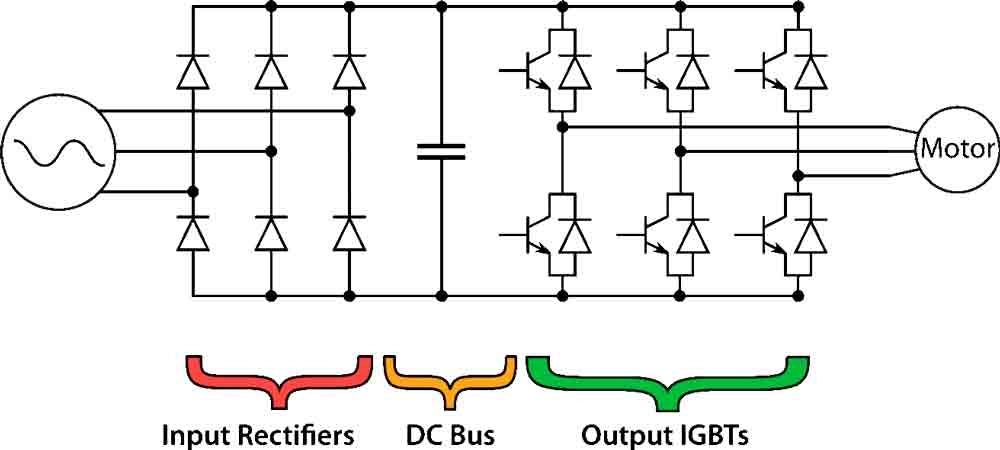
Elevator VFD power modules mainly use two types of power semiconductors: traditional silicon IGBT modules and emerging SiC MOSFET solutions. Understanding their strengths and differences helps in choosing the right option for elevator motor control semiconductors.
Traditional Silicon IGBT Modules
- Cost-effective: Lower initial cost and widely available
- Robustness: Proven reliability under cyclic loading and harsh conditions
- High current handling: Supports large elevator motors, including geared and PMSM types
- Advancements: Newer IGBT generations feature lower collector-emitter saturation voltage (Vce(sat)), faster switching speeds, and better thermal performance to meet modern elevator demands
SiC MOSFET Solutions
- Higher Efficiency: Lower conduction and switching losses mean less wasted energy
- Higher Switching Frequencies: Enables finer motor control with reduced torque ripple
- Reduced Cooling Needs: Smaller heatsinks, ideal for compact machine room less elevators
- Best for High-Rise/High-Speed: Handles extreme operating conditions and regenerative elevator drives more efficiently
- Emerging Technology: Although more expensive, costs are dropping with increasing adoption
Hybrid Si/SiC Modules
- Combine silicon IGBT robustness with targeted SiC MOSFET efficiency
- Balance cost and performance for mid-range elevator applications
Comparing IGBT and SiC for Elevator Duty Profiles
| Metric | Silicon IGBT | SiC MOSFET |
|---|---|---|
| Efficiency | Moderate | High |
| Power Density | Moderate | High |
| Switching Frequency | Up to ~20 kHz | 50 kHz or more |
| Thermal Capability | Up to 150°C junction | Up to 175°C junction |
| Cost | Lower | Higher (but decreasing) |
| Application Fit | Most elevator drives | High-speed, high-rise |
For practical elevator applications, both have their places depending on the project scope. For example, HIITIO’s advanced 1000V IGBT power modules provide solid, cost-effective solutions with improved thermal dissipation, while their SiC offerings push efficiency boundaries. Check out HIITIO’s portfolio of IGBT power modules for robust elevator drive options or explore SiC technology for next-gen energy savings.
Key Benefits of Optimized Power Semiconductor Solutions
Optimized power semiconductor solutions for elevator drives bring tangible advantages that directly affect both operators and passengers. Here’s why upgrading to advanced energy-efficient power semiconductors for elevators is a smart move:
- Energy Savings & Lower Costs: Reduced conduction and switching losses cut energy waste, shrinking electricity bills. Regenerative capabilities recover braking energy, sending it back to the grid or for reuse, which is a big plus in high-traffic elevators.
- Enhanced Ride Comfort: Precise vector control enabled by high-quality elevator drive motor control semiconductors lowers torque ripple, ensuring smooth acceleration and deceleration with quiet, seamless operation.
- Improved Reliability & Less Maintenance. Robust thermal designs and integrated protections keep modules safe from overheating and electrical stress, minimizing downtime and costly repairs.
- Compact, Lightweight Drives. Smaller power modules reduce drive cabinet sizes—essential for machine room less (MRL) elevators and space-limited retrofits, supporting modern building designs focused on efficiency and aesthetics.
- Better Power Quality & Infrastructure Health. Reduced harmonic distortion and improved power factor decreases electrical noise and stress on building wiring, enhancing overall power quality and equipment lifespan.
| Benefit | Impact | Elevator Application |
|---|---|---|
| Energy Efficiency | Lower energy consumption | Cost-effective operations |
| Regeneration Capability | Energy recovery during braking | Supports green building initiatives |
| Torque Ripple Minimization | Smoother ride quality | Better passenger comfort |
| Thermal Robustness | Longer module life; less downtime | Reliable lifts under high-duty cycles |
| Compact Form Factors | Saves space in machinery rooms | Ideal for MRL and retrofit projects |
| Power Quality Improvement | Reduced harmonic stress | Enhances building electrical system health |
Leveraging advanced elevator VFD power modules and regenerative elevator drives with optimized semiconductor solutions is a proven path to lowering operational costs while elevating ride quality and system reliability. For real-world efficiency gains and compact, reliable power modules, explore HIITIO’s portfolio featuring both cutting-edge IGBT and SiC technology tailored for elevator drives.

HIITIO Power Semiconductor Modules: Engineered for Elevator Excellence
HIITIO offers a robust portfolio of IGBT and SiC power modules designed specifically for elevator motor drives. These modules deliver the precision and reliability that elevator VFD power modules demand, supporting both PMSM and induction motors seamlessly.
Technical Advantages
- Low-loss chip technology reduces conduction and switching losses, cutting energy use and heat.
- Advanced packaging ensures superior thermal dissipation, vital for withstanding the cyclic loads found in elevator applications.
- High reliability guarantees long service life under heavy-duty cycles and thermal stress.
Features Tailored for Elevator Drives
- Integrated protection circuits for safe operation and fault prevention.
- High power density allows compact and lightweight drive designs—critical for machine room less (MRL) elevators.
- Compatibility with regenerative elevator drives supports energy recovery and power quality improvements.
Performance Gains vs. Conventional Modules
| Aspect | HIITIO IGBT Modules | HIITIO SiC Modules | Conventional Modules |
|---|---|---|---|
| Efficiency | Up to 97% | Up to 99% | Typically 92-95% |
| Power Density | High | Very High | Moderate |
| Thermal Management | Advanced packaging for fast heat removal | Excellent, reduces cooling needs | Standard |
| Switching Frequency | Up to 20 kHz | 50 kHz+ | 10-15 kHz |
| Lifetime under Cyclic Load | 10–20+ years | Comparable or better | Often lower |
Proven Elevator Integrations
Modules like the 750V 770A IGBT power module and the 650V 375A Easy 3B IGBT power module have demonstrated reliable performance in diverse elevator drive setups, delivering:
- Smoother ride experience through precise motor control.
- Lower operating costs due to reduced losses and enhanced regenerative braking.
- Compact drive solutions ideal for space-constrained US buildings.
With HIITIO’s power semiconductor modules, elevator manufacturers and system integrators gain the confidence of proven efficiency, compact design, and long-term reliability—key to meeting the expectations of modern vertical transportation.
Design and Integration Considerations for Engineers
When working on elevator drives, selecting the right power semiconductor module is critical. You need to carefully choose voltage and current ratings with enough safety margins to handle peak acceleration and deceleration. This ensures the elevator can respond quickly without stressing the components.
Proper thermal management is just as important. Effective heatsink design, along with derating and continuous temperature monitoring, helps maintain reliability over long duty cycles. This reduces downtime and extends the power modules’ service life in demanding elevator environments.
Gate driver and protection circuits should follow best practices to safeguard against overcurrent, short circuits, and voltage spikes. This protects both the power semiconductors and the motor control system from damage.
Integration with active front-end (AFE) or regenerative braking units is another key factor for energy-efficient elevator drives. These systems enable maximum energy recovery during descent, lowering operating costs and cutting energy waste.
Compliance with safety regulations like EN 81 and IEC standards is non-negotiable. Additionally, ensuring electromagnetic compatibility (EMC) prevents interference with building systems, a vital aspect in modern, interconnected infrastructure.
For modernization projects and retrofits, choosing power modules designed for compactness and easy integration—such as high-density, low-loss IGBT modules—is essential. HIITIO’s range includes solutions tailored to these needs, like the 1200V 600A IGBT module with advanced thermal features, providing reliability and efficiency for both new builds and upgrade projects.
By keeping these design and integration points in mind, engineers can build elevator drive systems that are efficient, reliable, and ready to meet modern performance demands.

Future Trends in Power Semiconductors for Elevators
The elevator industry is rapidly evolving, and so are the power semiconductor solutions driving elevator VFD power modules. One major trend is the wider adoption of SiC (silicon carbide) and other next-generation wide-bandgap devices. These components offer higher efficiency and greater switching speeds, which are perfect for high-speed or high-rise elevator applications aiming to reduce energy use and improve ride comfort.
We’re also seeing more intelligent power modules (IPMs) entering the scene. These come with built-in diagnostics and predictive maintenance capabilities, helping facility managers catch issues before they cause downtime. This advancement boosts system uptime and reliability, critical for elevators in busy commercial and residential buildings.
Another key development is the tighter integration of elevator drives with building energy management systems (BEMS). Linking power semiconductor modules with these smart systems optimizes energy consumption, adjusts ride patterns based on demand, and supports regenerative elevator drives to recover and reuse braking energy.
Sustainability is a growing focus in vertical transportation. The push for energy-efficient power semiconductors in elevators aligns with higher efficiency targets and stricter environmental standards in the U.S. The reduced carbon footprint from advanced semiconductor solutions contributes to greener buildings and lowers operating costs.
For elevators heading into the next decade, embracing these trends ensures safer, quieter, and more energy-conscious ride experiences. To explore cutting-edge silicon carbide technology tailored for elevator motor drives, check out HIITIO’s 1700V Silicon Carbide Schottky diodes, designed to meet high efficiency and reliability demands.


