

 EN
EN  DE
DE  ZH
ZH  ES
ES Understanding Reverse Recovery in Power Semiconductors
Learn about reverse recovery in power semiconductors, its impact on efficiency, and how HIITIO’s advanced modules optimize performance and reduce switching losses.

What Is Reverse Recovery in Power Semiconductors?
Have you ever wondered what causes sudden voltage spikes or switching losses in power electronics? One key factor is reverse recovery — a phenomenon that occurs in diodes and transistors during switching. Understanding reverse recovery is essential for designing efficient, reliable power systems.
Reverse Recovery in Diodes and Transistors
Reverse recovery happens when a power diode or transistor switches from conducting in the forward direction to blocking in the reverse direction. During this transition, charge carriers stored in the device must be removed before the device can fully block reverse voltage. This process generates a brief period of current flow in the opposite direction, which can cause power losses and voltage spikes.
How Reverse Recovery Happens During Switching
When a diode or transistor switches off, it doesn’t instantly stop conducting. Instead, the device still contains stored charge—electrons or holes accumulated during conduction. To turn off completely, this stored charge must be removed, resulting in a reverse current. This reverse recovery current flows temporarily until the device is ready to block voltage again.
Why Reverse Recovery Shows Up in Power Devices
Reverse recovery is a natural part of the junction behavior in power semiconductors. It mainly appears because of the charge carriers trapped in the device’s depletion region. As the device transitions from forward to reverse bias, these carriers need to be cleared out, causing a brief reverse current. This effect is especially noticeable in high-speed switching applications, such as motor drives, inverters, and power supplies.
In :
- Reverse recovery is a key factor in power semiconductor efficiency.
- It impacts switching losses, heat generation, and circuit reliability.
- Managing reverse recovery is crucial for high-frequency power switching and reducing electromagnetic interference (EMI).

Reverse Recovery Basics
When a power diode or transistor switches from forward bias to reverse bias, reverse recovery happens. During forward conduction, charge carriers—electrons and holes—accumulate in the device’s junction, creating a stored charge. When the device switches off and the voltage reverses, these charge carriers don’t disappear instantly. Instead, they need time to exit the junction, which causes a brief period of reverse current known as reverse recovery.
This process is crucial in power semiconductors because it affects how quickly a device can switch and how much energy is lost during that transition. The junction behavior during reverse recovery depends on the device structure and doping levels. Some devices, like fast recovery diodes, are designed to minimize this effect, while others, like standard diodes, experience more pronounced reverse recovery.
One key aspect is the difference between soft recovery and hard recovery. Soft recovery occurs when the reverse current decreases gradually, reducing voltage spikes and electromagnetic interference (EMI). Hard recovery, on the other hand, involves a sudden drop in reverse current, which can cause high-voltage transients and stress on the circuit components. Understanding these behaviors helps in designing more reliable and efficient power electronics systems.
Why Reverse Recovery Matters
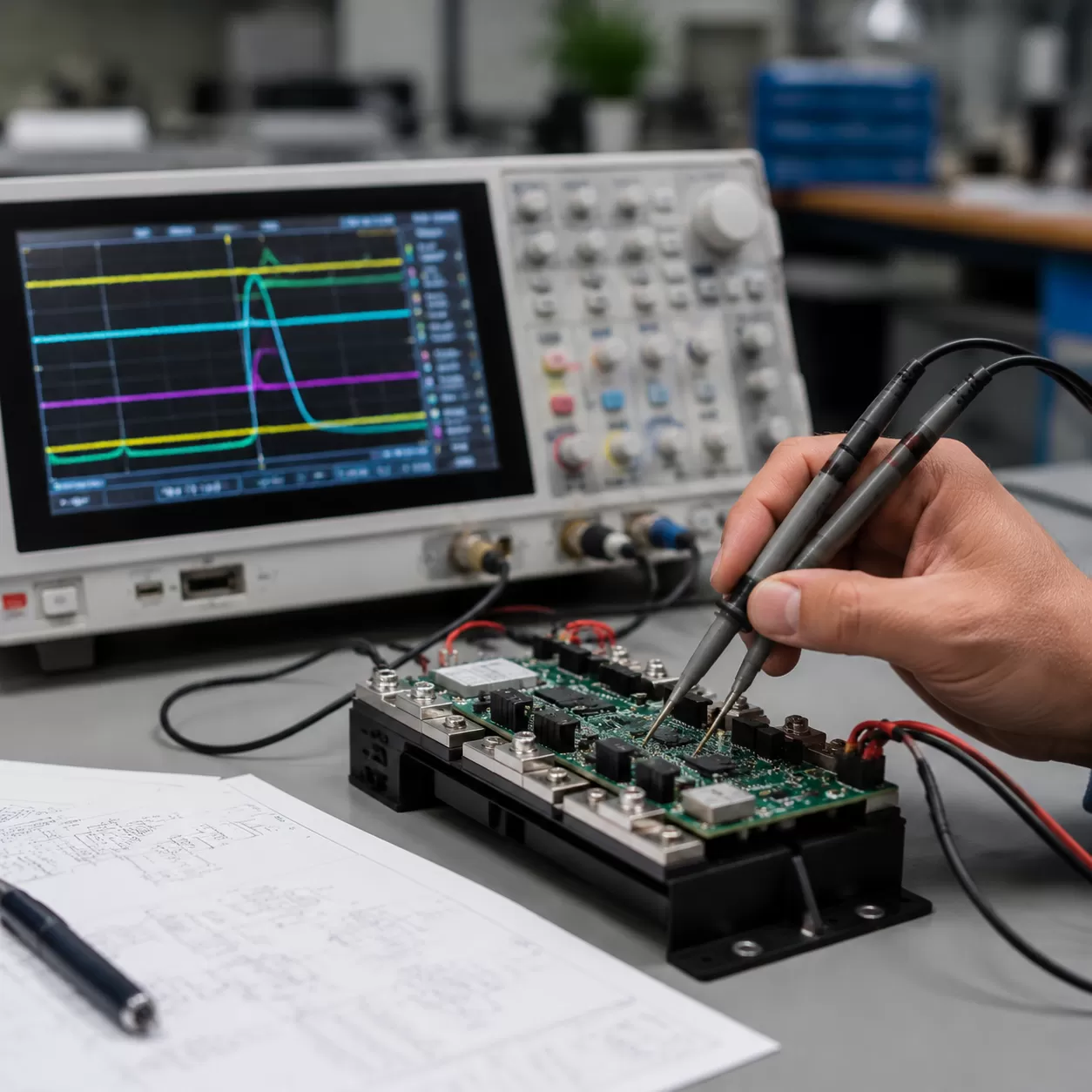
Reverse recovery in power semiconductors like diodes and transistors isn’t just a technical detail — it directly impacts the overall efficiency and reliability of your power electronics systems. When these devices switch from conducting to blocking, reverse recovery causes several issues that can’t be ignored.
One major concern is switching losses. During reverse recovery, the device has to handle a sudden reverse current, which leads to extra heat generation. This heat not only wastes energy but also shortens component lifespan, reducing overall power conversion efficiency. If you’re designing in the US, where energy costs matter, minimizing these losses is a smart move.
Another key factor is voltage spikes. When reverse recovery occurs, the abrupt change in current can cause voltage overshoots, stressing the circuit and possibly damaging other components. This is especially problematic in high-frequency switching applications like motor drives or inverters, where rapid switching is common.
Electromagnetic interference (EMI) is also a big concern. The sudden changes in current and voltage during reverse recovery generate high-frequency noise, which can interfere with nearby electronics or cause electromagnetic compatibility issues. Managing EMI in power semiconductors is crucial for both safety and performance.
In high-frequency switching scenarios, reverse recovery becomes even more problematic. It can lead to increased electromagnetic emissions and reduce the overall efficiency of your power system. That’s why choosing devices with optimized reverse recovery characteristics, like fast recovery diodes or SiC power modules, can make a big difference. For example, high-voltage IGBT modules are designed to handle these stresses better, improving system reliability.
Reverse Recovery Time and Charge
What Reverse Recovery Time Means
Reverse recovery time is the duration it takes for a diode or power transistor to switch from conducting in the forward direction to blocking in the reverse direction. During switching, this time determines how quickly the device can stop conducting reverse current after the voltage polarity changes. Shorter reverse recovery times are crucial for high-frequency power switching because they reduce the amount of energy lost during transitions, improving overall efficiency.
Reverse Recovery Charge Explained
Reverse recovery charge (Qrr) is the total amount of charge stored in the device’s junction that needs to be removed during reverse recovery. It’s measured in coulombs (C) and directly impacts switching losses. The higher the Qrr, the more energy is dissipated as heat during each switching cycle. This stored charge causes a brief period of reverse current flow, which can stress the device and increase heat generation.
Peak Reverse Current
Peak reverse current is the maximum current that flows through the device during the reverse recovery phase. This spike can cause voltage overshoot and stress the circuit components. Managing this peak current is essential, especially in high-speed switching applications, to prevent damage and ensure reliable operation.
Recovery Waveform and Key Parameters
The reverse recovery waveform shows how the current drops from its forward value to zero and then briefly flows in the reverse direction. Key parameters include:
- Reverse recovery time (trr): How long the device takes to switch from conducting to blocking.
- Reverse recovery charge (Qrr): Total charge moved during recovery.
- Peak reverse current (Irr): Highest reverse current during the process.
- Recovery slope: How quickly the current decreases, affecting switching losses.
Understanding these parameters helps in designing circuits that minimize losses and stress on devices like diodes and IGBTs. For example, choosing fast recovery diodes can significantly reduce reverse recovery time and charge, leading to more efficient power conversion systems.
What Affects Reverse Recovery
Several factors influence reverse recovery in power semiconductors, impacting their switching performance and overall efficiency.
Semiconductor material differences play a big role. For example, silicon (Si) devices typically have higher reverse recovery times compared to silicon carbide (SiC) power modules, which are known for their fast recovery characteristics. SiC modules, like those found here, can significantly reduce switching losses and improve efficiency in high-frequency applications.
Device structure and doping levels also matter. The way the semiconductor is built—such as the doping concentration and junction design—affects how quickly stored charge is removed during switching. Devices with optimized structures tend to have lower reverse recovery charge, which helps minimize voltage spikes and EMI.
Temperature and operating current influence reverse recovery behavior as well. Higher temperatures can increase charge carrier lifetime, leading to longer reverse recovery times. Similarly, higher currents tend to increase stored charge, making recovery slower and more challenging for the device to handle without stress.
Lastly, manufacturing process impacts the device’s internal quality and consistency. Precise control over fabrication steps ensures minimal defect-related charge trapping, which can prolong reverse recovery time and increase switching losses.
Understanding these factors helps in selecting the right power semiconductor—whether silicon or SiC—to meet your application’s efficiency and reliability needs.
Reverse Recovery in Real Devices
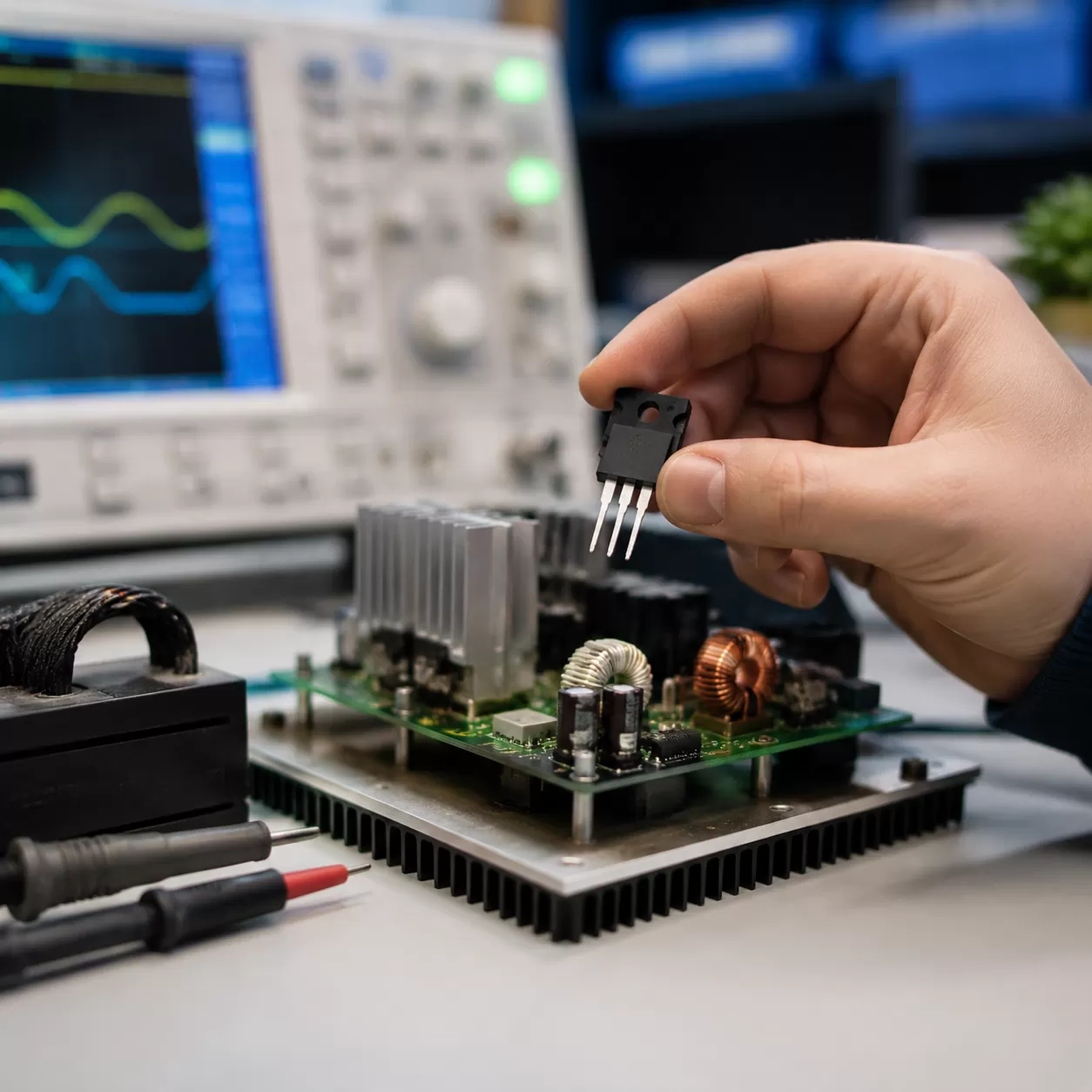
When it comes to actual power devices, reverse recovery behavior can vary quite a bit depending on the type of semiconductor and its design. Understanding how these devices handle reverse recovery is key to optimizing efficiency and reliability in power electronics.
IGBT Reverse Recovery
IGBTs (Insulated Gate Bipolar Transistors) are popular in high-voltage applications like motor drives and inverters. During switching, their body diode can exhibit reverse recovery, which causes switching losses and voltage spikes. Managing this reverse recovery is crucial for reducing heat and improving overall system efficiency. Some IGBTs are designed with controlled recovery features to minimize these issues, but engineers still need to consider the impact of reverse recovery during circuit design.
MOSFET Body Diode Recovery
Most power MOSFETs include an intrinsic body diode that conducts in the reverse direction. When switching from forward to reverse bias, this diode undergoes reverse recovery, which can generate voltage overshoot and EMI. Fast recovery MOSFETs are engineered to have lower reverse recovery charge, helping to reduce switching losses and improve high-frequency performance. If your application demands quick switching, choosing MOSFETs with optimized body diodes can make a big difference.
Fast Recovery Diodes
Fast recovery diodes are specially designed to handle reverse recovery with minimal charge and recovery time. These diodes are often used in power supplies and inverters where high switching speeds are required. They significantly reduce switching losses and voltage spikes, making them ideal for high-frequency power conversion. For applications in the US, like renewable energy systems or motor drives, fast recovery diodes help improve efficiency and reliability.
Soft Recovery Diodes
Unlike hard recovery diodes, soft recovery diodes transition smoothly from conducting to blocking state, which helps reduce voltage spikes and EMI. They are especially useful in sensitive circuits where minimizing electrical noise is critical. Soft recovery diodes are often chosen in applications like SMPS and automotive power electronics to balance switching speed with reduced stress on other components.
Junction Behavior in Switching Devices
The behavior of the junction during reverse recovery directly impacts device performance. In real devices, the junction’s response depends on factors like doping levels, device structure, and manufacturing quality. Proper junction design can help control reverse recovery charge and time, leading to better power conversion efficiency and less circuit stress. When selecting devices, understanding their junction behavior is key to optimizing your power electronics design.
By understanding the reverse recovery characteristics of these devices, engineers can better manage switching losses, reduce heat, and improve the overall reliability of power systems. Whether you’re working with IGBTs, MOSFETs, or diodes, choosing the right device with optimized reverse recovery features is essential for high-performance power electronics.
How to Reduce Reverse Recovery Losses
Reducing reverse recovery losses is key to improving power semiconductor efficiency and minimizing switching losses. Here are some practical ways to do that:
Use Fast Recovery Diodes
Fast recovery diodes are designed to switch from conducting to blocking state quickly, which reduces the reverse recovery time and charge. This leads to lower heat generation and less voltage spike during switching. For high-speed applications, consider fast recovery diodes that are optimized for minimal reverse recovery.
Choose SiC Power Modules
Silicon Carbide (SiC) power modules are a game-changer here. They have inherently lower reverse recovery charge and faster switching capabilities compared to traditional silicon devices. Using SiC modules can significantly cut down on switching losses and improve overall power conversion efficiency. Check out our SiC power modules for better performance in high-frequency switching circuits.
Optimize Gate Drive
A well-designed gate drive circuit helps control the switching speed and reduces unwanted reverse recovery effects. Proper gate resistors and timing control can ensure smoother transitions, lowering the risk of voltage spikes and EMI. This is especially important in applications like motor drives and inverters.
Improve Circuit Layout
Good layout practices can minimize parasitic inductance and reduce voltage overshoot during switching. Keep high-current paths short and thick, and separate sensitive components from switching elements. Proper layout helps in managing the junction behavior of power semiconductors and reduces stress during reverse recovery.
Add Snubbers Where Needed
Snubber circuits absorb voltage spikes caused by reverse recovery currents. They protect devices from voltage overshoot and reduce electromagnetic interference (EMI). Adding snubbers is a simple but effective way to improve circuit reliability and longevity.
Implementing these strategies can help you lower reverse recovery losses, boost efficiency, and extend the life of your power electronics systems.
Design Tips for Better Power Electronics
When designing power electronics, managing reverse recovery is key to improving overall system performance. Here are some practical tips to reduce reverse recovery losses and enhance reliability:
- Use fast recovery diodes: These devices minimize reverse recovery time and charge, reducing switching losses and voltage spikes. For high-voltage applications, consider SiC power modules, which offer even lower reverse recovery energy and better efficiency [see SiC power modules for renewable energy].
- Optimize gate drive circuits: Proper gate drive control can slow down switching transitions, decreasing the abrupt changes that cause high reverse recovery currents and EMI.
- Add snubbers or RC filters: These components help absorb voltage spikes caused by reverse recovery, protecting devices and reducing electromagnetic interference.
- Improve circuit layout: Keep loop areas small and minimize parasitic inductances. This reduces voltage overshoot and EMI, especially during high-frequency switching.
- Choose devices with low reverse recovery charge: Selecting diodes and transistors designed for soft recovery can significantly cut down switching losses and heat generation.
- Balance switching speed with reliability: While faster switching reduces losses, it can increase reverse recovery stress. Find the right balance for your application by testing different device types and configurations.
By implementing these tips, you can boost power conversion efficiency, lower EMI, and extend the lifespan of your power modules. For high-voltage, high-current systems, exploring advanced modules like those available at HiRel Semiconductors can make a real difference in achieving reliable, efficient power electronics.

Applications Where Reverse Recovery Matters
Reverse recovery plays a critical role in many power electronics applications, especially where high switching speeds and efficiency are essential. For example, in motor drives, managing reverse recovery is vital to reduce switching losses and prevent voltage spikes that can damage the system. Similarly, inverters used in renewable energy systems or electric vehicles need to handle reverse recovery efficiently to maintain smooth operation and high power conversion efficiency.
Switching Mode Power Supplies (SMPS) also rely heavily on low reverse recovery losses to improve overall efficiency and reduce electromagnetic interference (EMI). In renewable energy systems like solar inverters, controlling reverse recovery helps maximize energy transfer and reduce stress on power devices.
In automotive power electronics, where high switching frequencies are common, understanding and managing reverse recovery is key to ensuring reliability and longevity of components such as IGBTs and MOSFETs. Likewise, industrial automation equipment benefits from optimized reverse recovery characteristics to ensure stable performance under demanding switching conditions.
For these applications, choosing devices with low reverse recovery charge—like fast recovery diodes or SiC power modules—can significantly boost efficiency and reduce system stress. If you’re designing for high-frequency switching or demanding environments, exploring options like SiC power modules can make a noticeable difference in performance and reliability.
Reverse Recovery Examples and Use Cases
Reverse recovery can have a big impact on system reliability, especially in high-speed switching applications. When a power diode or transistor switches from forward to reverse bias, the stored charge needs to be cleared quickly. If not managed properly, this can lead to voltage spikes, increased switching losses, and even device failure over time.
In motor drives and inverters, for example, reverse recovery can cause voltage overshoot that stresses the devices and the circuit components. This is especially true in high-frequency switching scenarios, where the device switches rapidly between states. Engineers often see reverse recovery as a key factor in system stability and longevity.
To avoid these issues, practical solutions include choosing fast recovery diodes or SiC power modules, which have lower reverse recovery charges and shorter reverse recovery times. Proper circuit layout, adding snubbers, and optimizing gate drive parameters are also common ways to reduce the negative effects of reverse recovery. These measures help improve power conversion efficiency and protect the system from unexpected failures caused by voltage spikes or EMI.
For more on reliable power device choices, check out HiRel SiC Power Modules, which are designed to minimize reverse recovery issues in demanding applications.
FAQ on Reverse Recovery in Power Semiconductors
What causes reverse recovery?
Reverse recovery happens when a diode or transistor switches from conducting in the forward direction to blocking in the reverse direction. During this transition, stored charge in the device’s junction needs to be removed before it can fully block voltage again. This stored charge causes a temporary reverse current, known as reverse recovery current, which can lead to switching losses and voltage spikes. Factors like device structure, doping levels, and operating conditions influence how much charge is stored and how severe the reverse recovery effect will be.
How do I reduce reverse recovery losses?
To minimize reverse recovery losses, consider these approaches:
- Use fast recovery diodes that have shorter reverse recovery times and lower reverse recovery charge.
- Opt for SiC power modules, like those available here, which feature superior switching performance and reduced reverse recovery effects.
- Optimize your gate drive circuitry to control switching speeds carefully, avoiding abrupt transitions that increase reverse recovery.
- Improve circuit layout to reduce parasitic inductances, which can exacerbate voltage spikes during switching.
- Add snubbers or damping circuits where needed to suppress voltage overshoot and minimize EMI caused by reverse recovery.
Why is reverse recovery worse at high frequency?
At high switching frequencies, the device switches on and off more rapidly, leaving less time for stored charge to dissipate. This leads to increased reverse recovery current and charge, raising switching losses and generating more heat. The rapid transitions also cause voltage spikes and electromagnetic interference (EMI), which can stress the device and reduce overall system reliability. That’s why choosing devices with low reverse recovery characteristics, like soft recovery diodes or SiC power modules, becomes critical in high-frequency applications.
Which devices have lower reverse recovery?
Devices designed for low reverse recovery include:
- Fast recovery diodes, specifically engineered to have minimal reverse recovery charge and time.
- SiC power modules, such as the HiRel SiC modules, which offer significantly lower reverse recovery effects compared to traditional silicon devices.
- IGBTs with integrated body diodes that are optimized for soft recovery, reducing switching losses and EMI.
- Advanced MOSFETs with specially engineered junctions to minimize stored charge during switching.
Choosing the right device depends on your application’s switching frequency, efficiency goals, and thermal management capabilities.


