

 EN
EN  DE
DE  ZH
ZH  ES
ES Understanding Power Cycling Tests in IGBT and SiC Modules for Reliable Power Electronics
Learn about understanding power cycling tests in IGBT and SiC modules, including failure mechanisms, standards, and how HIITIO’s advanced modules ensure reliability.

What Is Power Cycling in Power Modules?
Power cycling is a crucial testing process for power modules, including IGBT and SiC modules. It involves repetitive on/off switching of the power device, which causes rapid temperature swings inside the semiconductor. This cycle simulates real-world operating conditions and helps evaluate the durability and reliability of these modules.

Fundamental Principle of Power Cycling
At its core, power cycling mimics the on-state and off-state operation of power modules in actual applications. When the device switches on, it heats up due to current flow; when it switches off, it cools down. Repeating this process generates thermal stresses that can lead to component degradation over time.
How Power Cycling Differs from Thermal Cycling
While both involve temperature changes, power cycling specifically focuses on localized hot spots caused by electrical switching, whereas thermal cycling involves uniform temperature variations across the entire device or package. Power cycling is more representative of real operating conditions because it accounts for the thermal gradients experienced during actual switching events.
Typical Cycle Times and Key Stress Parameters
- Cycle times usually range from a few seconds to several minutes, depending on the device and testing standards.
- Temperature ranges vary but often involve junction temperature swings (ΔTj) of 50°C to over 200°C.
- The three key stress parameters are:
- ΔTj (Junction Temperature Swing): The difference between maximum and minimum junction temperatures during cycling.
- Mean Tj (Average Junction Temperature): The typical operating temperature of the device.
- Ton (On-Time Duration): The period during which the device remains in the on-state, influencing the thermal load.
Understanding these parameters helps engineers design more robust power modules and predict their lifetime under real-world power cycling conditions.
Power Cycling in IGBT Modules: Design and Failure Characteristics
The internal structure of IGBT modules plays a big role in how they handle power cycling. When these devices switch on and off repeatedly, they experience rapid temperature swings that create thermal gradients inside the module. These temperature differences lead to stress concentrations, especially around the wire bonds, die-attach solder, and the baseplate.
In IGBT modules, the way the semiconductor layers are stacked and bonded influences where these thermal stresses are most intense. For example, areas near the wire bonds often face wire-bond lift-off due to fatigue, while solder fatigue at the die-attach is another common failure point. Baseplate warpage can also occur, especially under high power cycling stress, causing mechanical stress that accelerates degradation.
Practical power cycling tests on standard IGBT modules reveal how the design impacts reliability. Advanced bonding techniques, like sintered die-attach, help distribute heat more evenly and reduce stress concentrations. These improvements can significantly extend the power cycling lifetime of IGBT modules, making them more reliable under demanding conditions.
Power Cycling in SiC Modules: Challenges and Advantages
Silicon carbide (SiC) modules bring a lot of benefits, like higher efficiency and faster switching speeds, but they also introduce unique challenges when it comes to power cycling reliability. Because SiC devices can handle steeper temperature gradients, they often experience higher mechanical stress during power cycling tests. This is due to the material’s superior conductivity, which causes rapid temperature swings inside the module. These steep gradients can lead to issues like die cracking, aluminum metallization reconstruction, and sintered interface degradation—problems that are less common in traditional IGBT modules.
However, modern packaging solutions are helping extend the lifetime of SiC modules significantly. Techniques such as copper clips, aluminum metalized (AMB) substrates, and silver sintering for die attach are now standard. These advancements improve thermal management and reduce mechanical stress, making SiC modules more durable under power cycling conditions. Compared to traditional IGBT designs, these innovations help mitigate the risks associated with steep temperature swings, ensuring more reliable operation in demanding applications like electric vehicles and industrial drives.
Active Power Cycling vs Passive Thermal Cycling: Key Differences
Understanding the differences between active power cycling and passive thermal cycling is crucial for accurate lifetime prediction of IGBT and SiC modules. Here’s a quick comparison:
| Aspect | Active Power Cycling | Passive Thermal Cycling |
|---|---|---|
| Temperature Distribution | Localized hot spots during on/off switching | Uniform temperature change across the entire module |
| Failure Focus | Stress concentrated at wire bonds, solder joints, and die interfaces | Overall material fatigue, like solder and die-attach degradation |
| Lifetime Prediction | More realistic, field-relevant data | Typically less accurate for real-world conditions |
Active power cycling tests simulate actual operating conditions by repeatedly switching the device on and off, creating rapid, localized temperature swings. This method stresses specific failure points, such as wire bonds and solder joints, making it more reliable for predicting real-world lifetime. In contrast, passive thermal cycling involves uniform temperature changes without power flow, which may not reflect actual device stresses.
Standards like AQG324 and IEC 60747-15 emphasize active power cycling because it provides field-relevant data. This approach helps manufacturers and engineers better understand how modules will perform under real operating conditions, ensuring more accurate lifetime estimates and improved reliability.

How Power Cycling Tests Are Performed
Power cycling tests are essential to evaluate the durability of IGBT and SiC modules under real-world conditions. These tests are often performed using specialized equipment that allows simultaneous testing of multiple modules, helping to gather comprehensive data efficiently. The setup typically involves applying controlled on-state current pulses to simulate actual switching conditions, while off-state body-diode sensing monitors the module’s response during turn-off cycles.
The step-by-step process starts with applying an on-state current pulse, which causes the module to heat up rapidly. During this phase, temperature calibration is crucial to ensure accurate measurement of junction temperatures. Infrared imaging is commonly used to visualize temperature distribution and identify hot spots, providing insights into how the module responds to power cycling stress.
Monitoring parameters include the voltage across the collector-emitter (VCE(sat)) or drain-source (VDS) during switching, as well as tracking thermal resistance (Rth) increases over time. These indicators help detect early signs of degradation. Additionally, the Thermal Shock Evaluation Protocol (TSEP) measures how the module’s temperature changes during cycling, giving a comprehensive view of its thermal performance.
Failure criteria are based on industry benchmarks, typically set at a +5% increase in VCE(sat) or a +20% rise in Rth. When these thresholds are reached, the module is considered to have failed the power cycling test. This process helps engineers predict the module’s lifetime and reliability, especially for demanding applications like electric vehicles and industrial drives. For more details on testing standards, you can explore power cycling test methodology in IGBT and SiC modules.
Power Cycling Test Parameters and Stress Profiles
When conducting power cycling tests on IGBT and SiC modules, understanding the key parameters that influence stress profiles is crucial. These parameters include pulse duration (PCsec vs PCmin), ΔTj range, and Tj,max, each impacting failure modes differently.
Pulse Duration (PCsec vs PCmin)
- PCsec (Power Cycle seconds): Represents longer pulse durations, simulating real-world operating conditions.
- PCmin (Power Cycle minutes): Shorter pulses used for accelerated testing.
- Longer pulse durations tend to accelerate failures related to solder fatigue and wire-bond wear, while shorter pulses emphasize rapid thermal cycling effects.
ΔTj Range (Junction Temperature Swing)
- The difference between maximum and minimum junction temperature during cycles.
- Larger ΔTj accelerates thermal fatigue, leading to solder cracks and bond-wire fatigue.
- Smaller ΔTj mimics normal operation, providing more realistic lifetime predictions.
Tj,max (Maximum Junction Temperature)
- Higher Tj,max increases thermal stress, speeding up failure mechanisms like die cracking or interface degradation.
- Managing Tj,max within test limits ensures the test remains representative of actual operating conditions.
Designing Stress Profiles
- To create accelerated yet representative lifetime models, test matrices combine these parameters strategically.
- For example, increasing ΔTj with shorter pulse durations can simulate years of operation in a shorter time.
- This approach helps predict module lifetime accurately under typical field conditions.
| Parameter | Effect on Failure Modes | Typical Range | Notes |
|---|---|---|---|
| Pulse Duration (PCsec vs PCmin) | Wire-bond fatigue, solder cracks | From seconds to minutes | Longer pulses for real-world, shorter for accelerated tests |
| ΔTj Range | Thermal fatigue, solder, bond wear | 50°C to 200°C | Larger swings accelerate failures |
| Tj,max | Die cracking, interface degradation | Up to 200°C | Higher Tj,max increases thermal stress |
By carefully selecting these parameters, engineers can develop reliable power cycling tests that predict how modules will perform over their lifespan. This helps in designing better modules and setting realistic expectations for end-use durability.
Failure Mechanisms and Root-Cause Analysis
In power cycling tests for IGBT and SiC modules, understanding the failure mechanisms is key to improving reliability. Common issues include solder delamination and cracking, which happen when the solder joints can’t handle the repeated thermal stresses, leading to separation or cracks that compromise electrical connection. Bond-wire fatigue and heel cracking are also critical, as the wire bonds experience cyclic stress and can eventually break or develop cracks, especially under high junction temperature swings.
For SiC modules, die-level problems are more specific due to the material’s wide-bandgap properties. These issues include die cracking caused by steep thermal gradients, reconstruction of aluminum metallization, and interface degradation in sintered joints. SiC’s higher mechanical stress from rapid temperature changes can accelerate these failures, especially if the packaging isn’t optimized for power cycling endurance.
Another important factor is feedback loops that speed up degradation. When one failure mechanism raises the local junction temperature, it can trigger additional stress and accelerate other failure modes. This domino effect shortens the overall power cycling lifetime, making early detection and mitigation crucial.
To minimize these risks, modern power modules incorporate advanced packaging solutions—such as sintered die-attach, copper clips, and optimized thermal paths—that help distribute stress more evenly and extend the module’s operational life. For more on how innovative packaging improves power cycling reliability, check out HiRel’s power module solutions.
Standards, Test Methods, and Industry Guidelines
When it comes to power cycling tests for IGBT and SiC modules, adhering to industry standards is crucial for ensuring reliability and safety. Key guidelines include AQG324, IEC 60747-15, and JESD standards, which define the testing protocols and failure criteria for power modules. These standards help manufacturers and engineers develop consistent testing methods that reflect real-world operating conditions, especially for high-demand applications like electric vehicles and industrial drives.
Active power cycling protocols are generally preferred over passive thermal cycling because they better simulate actual operating stresses. Active testing involves applying controlled on/off power pulses, which cause localized junction temperature swings—more representative of field conditions. In contrast, passive thermal cycling relies on temperature changes without electrical load, which can overlook critical failure modes like wire-bond fatigue or solder delamination.
For accurate and repeatable results, best practices include precise virtual junction temperature measurement and detailed data collection. Using infrared imaging and temperature sensors helps monitor the actual junction temperature during tests. This data is essential for understanding how the module responds under stress and for predicting its lifetime more reliably. Proper measurement techniques ensure that test results align with real-world performance, ultimately guiding better design and material choices for power modules.
Lifetime Modeling and Prediction Using Power Cycling Data
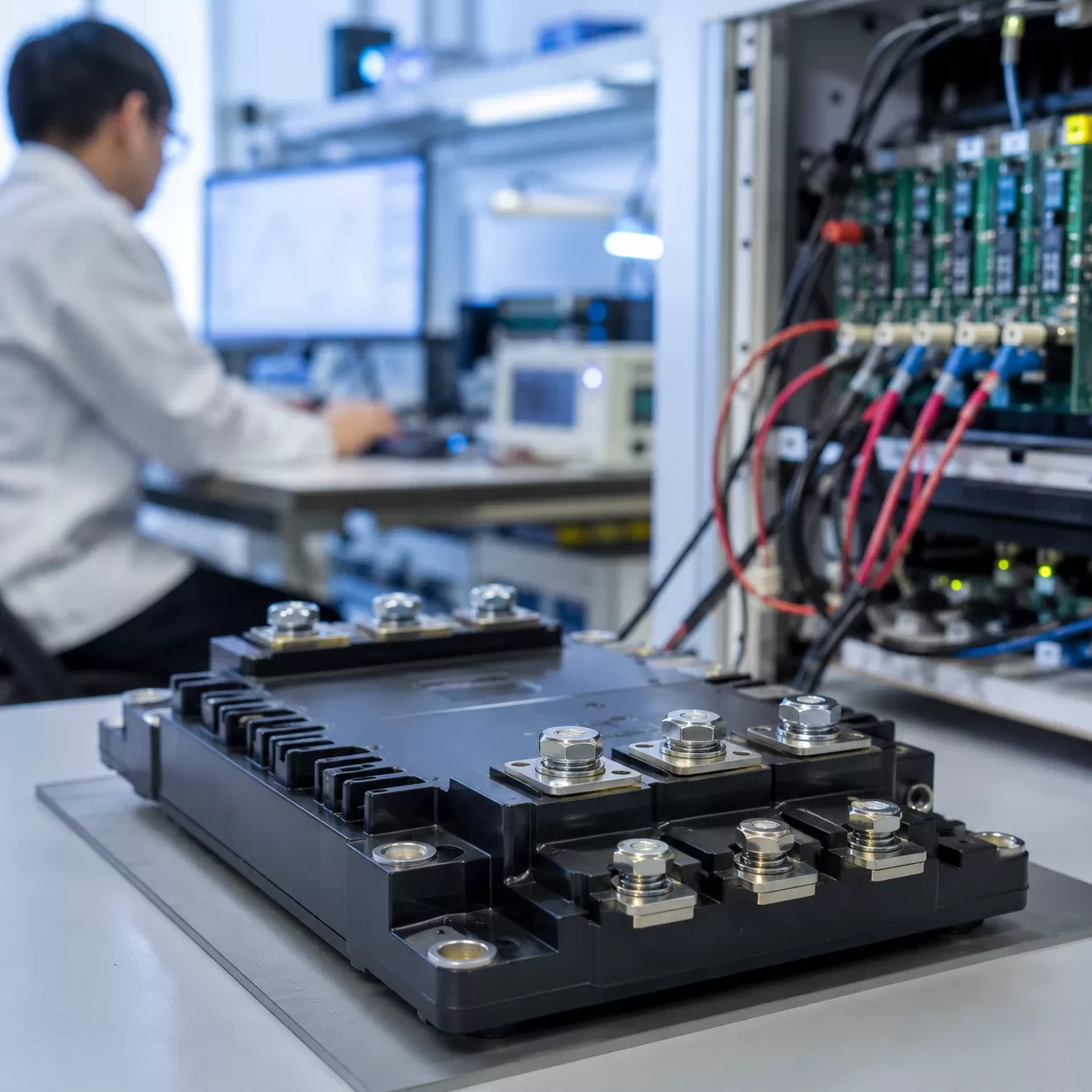
Using power cycling data helps create more accurate and conservative field-life models compared to traditional thermal cycling tests. Power cycling tests mimic real operating conditions better because they include actual on/off switching, temperature swings, and electrical stresses that modules face in the field. This makes the models more reliable for predicting how long IGBT and SiC modules will last over their service life.
To develop these models, engineers rely on statistical methods that analyze failure data collected during power cycling tests. These methods incorporate acceleration factors—parameters that speed up the aging process in tests—to estimate how long modules will perform under normal conditions. This approach ensures that the lifetime predictions are both realistic and relevant to actual use cases.
For example, in automotive applications like EV inverters, power cycling data can help determine the expected lifetime of modules under typical driving patterns. Similarly, in industrial settings such as wind turbines or drives, these models guide maintenance schedules and system design to prevent unexpected failures. By leveraging power cycling data, we can better understand failure mechanisms like solder fatigue or wire-bond lift-off, leading to more durable and reliable power modules in the field.
Practical Insights: Real-World Applications and Engineering Considerations
In real-world applications like EV inverters, wind turbines, and industrial drives, power cycling failures are a common concern. These modules often experience repeated on/off switching, which causes junction temperature swings that can lead to wire-bond fatigue, solder cracks, or die damage over time. For example, in EV inverters, frequent power cycling during acceleration and braking can accelerate degradation if not properly managed. Similarly, wind turbines face harsh conditions with constant load changes, making reliable power cycling design critical.
Interpreting test results is key to effective system derating and condition monitoring. By analyzing parameters such as VCE(sat) or VDS rise, thermal resistance increase, and infrared imaging data, engineers can predict when a module is approaching its failure point. This proactive approach helps prevent unexpected downtime and extends the lifespan of power modules.
To minimize power cycling stress at the module level, engineers should focus on smart design strategies. Using advanced packaging techniques—like sintered die-attach, copper-clip interconnects, and optimized thermal paths—can significantly improve reliability. For example, HiRel power modules incorporate such features to deliver longer lifetime and better performance in demanding environments. Proper thermal management, along with controlling pulse duration and temperature swings, is essential to reduce the risk of failure in both IGBT and SiC modules.
HIITIO’s Power Module Solutions
At HIITIO, we understand that reliable power cycling in IGBT and SiC modules is crucial for demanding applications like electric vehicles, industrial drives, and renewable energy systems. That’s why our power modules incorporate advanced packaging techniques designed to enhance power cycling endurance and overall durability.
Our modules feature sintered die-attach technology, which provides a robust and stable connection between the die and the substrate, significantly improving thermal conductivity and reducing the risk of solder fatigue or delamination during repetitive on/off cycles. Coupled with copper-clip interconnects, this design ensures efficient heat transfer and electrical performance, helping to mitigate junction temperature swings that can accelerate failure.
Additionally, we optimize thermal paths within our modules to minimize thermal resistance, which is vital for extending the lifetime of both IGBT and SiC modules. This approach helps manage the steep temperature gradients that occur during power cycling, especially in SiC devices, where higher mechanical stress can lead to issues like die cracking or interface degradation.
Customer benefits include a notably extended lifetime, reduced downtime, and reliable operation even in harsh environments. Our advanced packaging solutions are tailored to meet the industry’s toughest standards, ensuring your systems stay operational longer and require less maintenance. To explore how our power modules can improve your system’s power cycling reliability, visit HIITIO’s contact page.


