
 EN
EN  DE
DE  ZH
ZH  ES
ES Press Pack IGBT vs Standard Modules Differences Performance and Applications
Discover the key differences and applications of press-pack IGBTs versus standard IGBT modules for high-power reliable systems.

What Are Standard IGBT Modules?
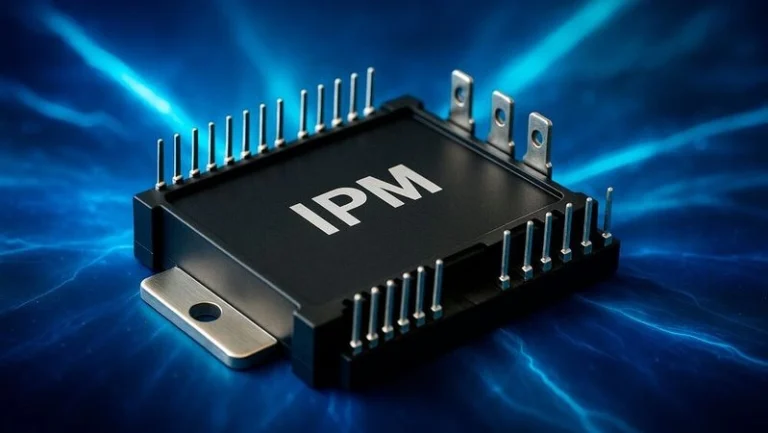
Standard IGBT modules are widely used power semiconductor devices designed with isolated bases and typically employ wire-bonded or soldered packaging techniques. These modules feature interconnected chips secured via fine wire bonds or solder joints, providing electrical connections within the package.
Common standard module configurations include half-bridge and six-pack designs, catering to typical voltage ratings ranging from a few hundred volts up to several kilovolts, with current capacities usually in the tens to hundreds of amperes. These setups support diverse power electronics applications such as general-purpose motor drives, renewable energy inverters, and industrial UPS systems.
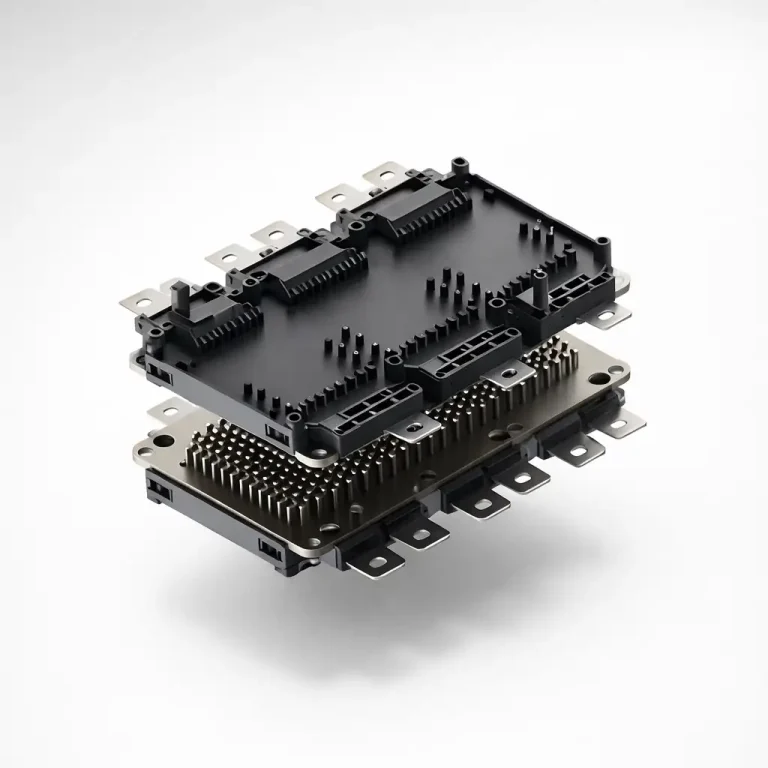
In terms of construction, standard IGBT modules consist of a metal baseplate that facilitates mechanical stability and heat conduction. The semiconductor chips are connected by wire bonds or soldered joints and then protected by a gel encapsulation that shields against moisture and contaminants. Cooling is predominantly single-sided—through the baseplate—requiring an effective heat sink interface to manage thermal loads.
Key characteristics of standard IGBT modules:
- Isolated-base design with wire bonds or soldered connections.
- Common package types: half-bridge and six-pack arrangements.
- Typical ratings: medium voltage and moderate current levels.
- Construction: rigid baseplate, gel encapsulation, and single-sided cooling via the base.
This design approach aligns well with many standard industrial and renewable energy applications where moderate to high efficiency and reliability are necessary at a competitive cost.
What Are Press Pack IGBTs?
Press-pack IGBTs use pressure-contact technology, which means the semiconductor chips are enclosed in a hermetic housing and held together by mechanical pressure instead of delicate wire bonds. This design replaces traditional wire-bond connections with spring-loaded pressure contacts, providing a more robust and reliable electrical interface.
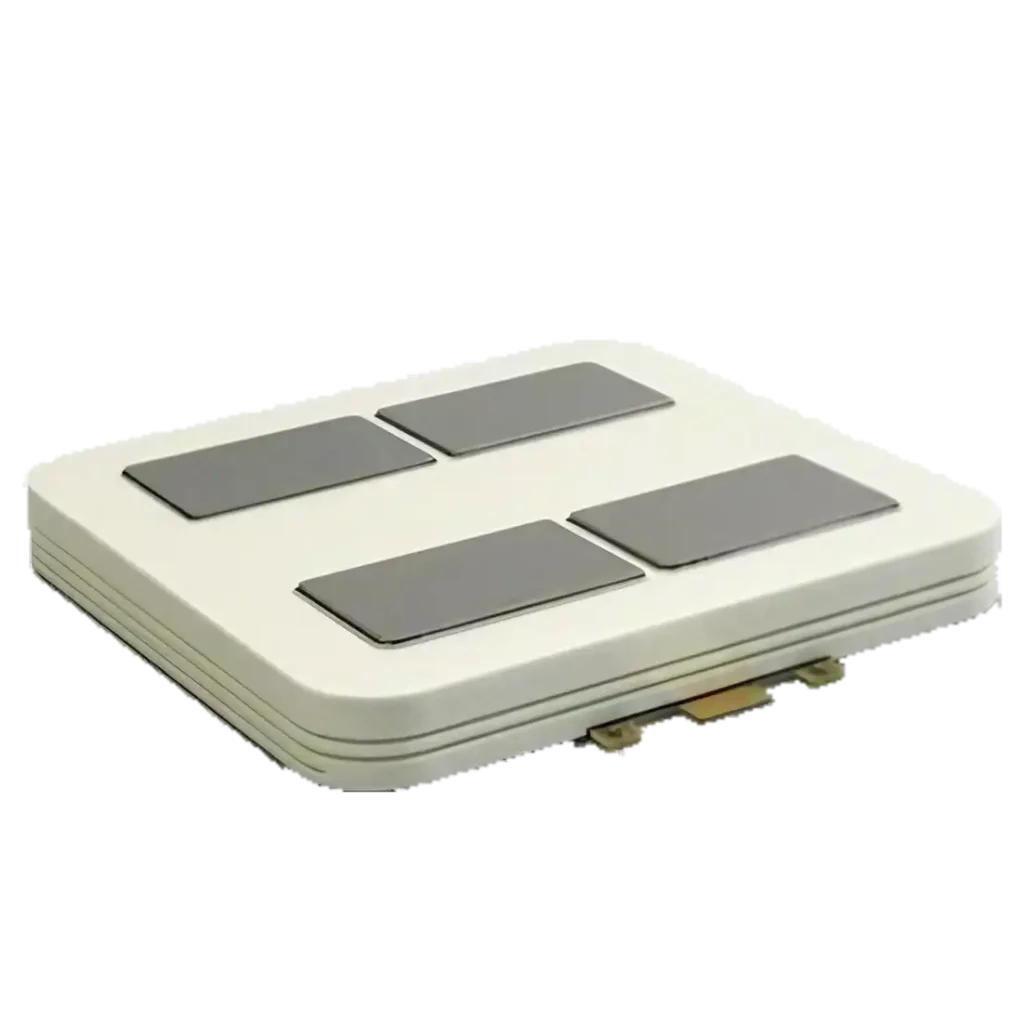
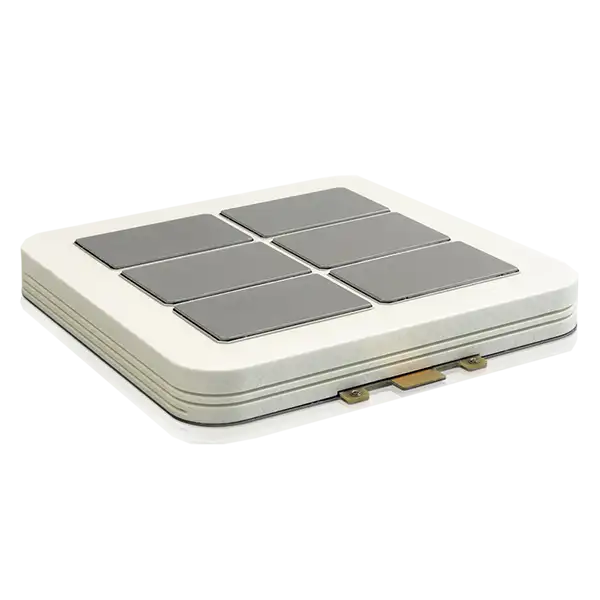
One major advantage is the potential for double-sided cooling. Unlike standard IGBT modules that cool only from the bottom, press-pack IGBTs allow heat dissipation from both sides, improving thermal performance, especially under high loads. These modules typically use modular designs with spring mechanisms to ensure uniform pressure across the IGBT chips, which enhances mechanical stability and reduces the chance of hot spots.
Press pack IGBTs excel in handling high current and high voltage ratings, making them tough contenders in demanding applications. Their failure mode is short-on-fail, meaning if a device fails, it usually creates a short circuit rather than an open circuit. This characteristic is critical in applications where fail-safe operation and predictable failure modes are necessary, such as HVDC transmission and traction systems.
This technology stands out for its durability and reliability under heavy stress, distinguishing it from wire-bonded modules commonly used in general-purpose power electronics.
For more insights into high-power IGBT packaging and application, check out HIITIO’s high-performance IGBT power modules designed for tough conditions.
Core Structural and Packaging Differences
When comparing press-pack IGBTs and standard IGBT modules, the structural and packaging differences are key to understanding their performance and applications:
| Feature | Press-Pack IGBT | Standard IGBT Module |
|---|---|---|
| Contact Method | Pressure contact using spring mechanisms — no wire bonds or solder joints | Wire-bonded or soldered connections, prone to fatigue and lift-off |
| Thermal Path | Double-sided cooling allows heat extraction from both sides for better thermal management | Single-sided cooling with baseplate transferring heat |
| Inductance & Stray Parameters | Lower stray inductance due to compact pressure contacts, benefiting switching performance | Higher parasitic inductance because of wire bonds and leadframes |
| Mechanical Robustness | High mechanical strength with uniform pressure distribution across chips, reducing stress points | Wire bonds vulnerable to mechanical stress and vibration-induced failures |
| Housing & Environmental Sealing | Hermetically sealed housing protects against moisture and contaminants | Gel encapsulation offers basic protection but less environmental sealing |
These packaging differences reflect on reliability and thermal performance, making press-pack IGBTs better suited for high-power, high-reliability environments, while standard modules remain popular for general applications. For advanced options, check out HIITIO’s high-voltage IGBT power modules designed for robust performance and efficient cooling.
Performance Comparison: Electrical and Thermal Characteristics
When comparing Press Pack IGBT vs Standard IGBT modules, electrical and thermal performance are key factors to consider.
| Feature | Press Pack IGBT | Standard IGBT Module |
|---|---|---|
| Conduction losses | Typically lower due to uniform pressure contact and stronger chip connection | Slightly higher due to wire-bond resistance |
| Switching losses | Comparable, but may vary depending on design and voltage ratings | Generally consistent with established half-bridge/six-pack configurations |
| Thermal resistance | Lower overall thermal resistance thanks to double-sided cooling | Higher thermal resistance with single-sided cooling baseplate |
| Heat dissipation | Superior cooling efficiency via double-sided cooling paths | Limited to baseplate cooling, less effective at high power densities |
| Current handling | High current capability, suitable for medium and high-voltage ranges | Moderate current ratings; optimal for low to medium power levels |
| Voltage ratings | Can handle higher voltages (up to several kV) due to robust packaging | Typical voltage ratings up to 1700 V and slightly beyond |
| Switching behavior | Stable switching with wide safe operating area (SOA) under stress | Well-understood switching profiles with design constraints due to wire bonds |
| Short-circuit withstand | Short-on-fail mode ensures safe failure by shorting chips, allowing system-level protection | Risk of open-circuit failure from wire-bond lift-off, which can cause catastrophic damage |
Press-pack IGBTs excel in applications requiring robust thermal management and high current handling because their double-sided cooling allows more efficient heat removal. This translates to better power cycling endurance and reliability under heavy loads. On the other hand, standard IGBT modules remain a solid choice for general-purpose applications where moderate power and simpler cooling suffice.
For power module users interested in advanced integration with gate drivers and optimizing module performance, exploring resources like HIITIO’s insights on integration of power modules with gate drivers can be valuable. This further helps to maximize thermal management and electrical efficiency in industrial setups.
Reliability and Lifetime Advantages
Press-pack IGBTs offer significant reliability benefits over standard wire-bonded modules, mainly due to their unique pressure-contact design. Unlike traditional modules where wire bonds can lift off or solder joints may develop fatigue after repeated thermal cycling, press-pack IGBTs avoid these weak points altogether. This results in:
- No wire-bond lift-off or solder fatigue, which are common failure modes in standard IGBTs.
- Superior power cycling endurance under thermal stress, meaning press-pack devices last longer in demanding applications.
- Predictable failure modes, typically short-on-fail, which allows easier system-level redundancy and fault management compared to open-circuit failures common in wire-bond IGBTs.
Long-Term Field Data Supports Press-Pack Reliability
In real-world, high-stress environments such as HVDC transmission and traction systems, press-pack IGBTs consistently demonstrate better lifetime performance. This is attributed to:
| Reliability Factor | Press-Pack IGBTs | Standard Wire-Bond Modules |
|---|---|---|
| Wire-bond/solder fatigue | Eliminated | Common failure mode |
| Power cycling endurance | High (10^5+ cycles typical) | Moderate (10^3 – 10^4 cycles) |
| Failure mode predictability | Short-on-fail (fail safe) | Open-circuit (hard to detect) |
| Maintenance needs | Lower due to robustness | Higher, frequent replacements |
For demanding power systems that require long-term stability and minimal downtime, press-pack IGBTs clearly outshine standard modules. This makes them the preferred choice in industries where system reliability and lifetime matter most.
For more on advanced, reliable power components, check out our high-power IGBT modules designed for tough, long-lasting operation.
Key Applications: Where Each Technology Excels
Standard IGBT modules are widely used in general-purpose drives, renewable energy inverters like solar and wind systems, uninterruptible power supplies (UPS), industrial motor control, and other low-to-medium power applications. Their flexibility and cost-effectiveness make them the go-to choice for many conventional settings where reliable switching and moderate power ratings are sufficient. For example, HIITIO’s 1200V 600A IGBT power module offers a strong balance of performance and affordability in these areas.

On the other hand, press-pack IGBTs shine in demanding applications that need higher reliability and robust power handling. These include HVDC transmission systems such as Voltage Source Converter (VSC) and Modular Multilevel Converter (MMC) configurations, Flexible AC Transmission Systems (FACTS), medium to high-voltage motor drives, traction converters, and pulsed power solutions. Their ability to handle high voltage and current with uniform pressure distribution makes them ideal for series-connected stacks that require superior reliability and fault tolerance. This is critical in heavy-duty infrastructure and transport sectors where downtime is costly.
Choosing between standard modules and press-pack IGBTs often comes down to your application’s voltage, current needs, and reliability priorities. For more information on standard module options tailored to medium power applications, check out HIITIO’s 62mm 1700V 200A IGBT power module for a reliable solution.
When to Choose Press Pack Over Standard Modules (and Vice Versa)
Choosing between press-pack IGBTs and standard IGBT modules depends mostly on your application’s power level, system complexity, and maintenance priorities. Here’s a simple breakdown of key factors to consider:
| Criteria | Press Pack IGBTs | Standard IGBT Modules |
|---|---|---|
| Power Level | Best for high-power, high-current, medium to high voltage | Ideal for low-to-medium power applications |
| Series Connection Needs | Excellent for series stacks requiring uniform pressure and reliable connections | Less suited for long series stacks due to wire-bond limits |
| Redundancy & Failure Mode | Short-on-fail behavior allows system-level protection and redundancy | Risk of open-circuit failure without fail-safe |
| Maintenance & Service | Modular design with pressure contacts simplifies replacement and reduces solder/wire-bond stress | More sensitive to thermal cycling; wire-bond degradation over time |
| Cost vs Lifetime | Higher upfront cost but longer lifetime and better reliability | Lower initial cost, suitable for cost-sensitive projects |
| Cooling Setup | Requires double-sided cooling solutions, which may increase system complexity | Single-sided cooling is simpler, common in industrial drives |
| Stack Assembly | Needs precise mechanical assembly for uniform pressure; ideal for HVDC and traction converters | Easier to assemble for general-purpose drives and renewable inverters |
- Choose press-pack IGBTs if you need robust, high-current devices with exceptional reliability under thermal stress, especially for HVDC transmission, medium-voltage drives, or series-connected stacks.
- Opt for standard IGBT modules for typical industrial motor control, UPS, and renewable energy inverters where cost and ease of integration are key.
Understanding these differences helps you balance upfront investment, system reliability, and long-term maintenance costs. For those needing advanced, reliable IGBT solutions with flexible integration, check out HIITIO’s high-performance power modules designed for demanding applications at 1200V 600A IGBT modules.
HIITIO’s Perspective: Advanced Power Module Solutions
At HIITIO, we specialize in high-performance IGBT modules designed to meet the growing demands of the U.S. power electronics market. Our products combine cutting-edge technology with proven reliability, making them perfect for challenging high-power applications where both standard IGBT modules and press-pack IGBTs are used.
We offer tailored solutions that embrace the advantages of press-pack IGBT technology—like enhanced thermal performance and mechanical robustness—while ensuring customization for diverse industries such as renewable energy, industrial drives, and traction systems. Our modules provide excellent power cycling endurance and long lifetime, minimizing downtime and maintenance costs.
With HIITIO, you benefit from comprehensive support that helps you integrate advanced power modules efficiently into your system. Whether you need high-current ratings or series connection stacks for HVDC or medium-voltage converters, our solutions align perfectly with the reliability and performance needs of press-pack IGBTs.
Explore our range of high-power devices, like the 1700V 1600A high-voltage IGBT power module, to find the optimal fit for your next project. Learn more about what drives the quality and innovation behind our power modules on our detailed high-voltage IGBT power module page.